
'Vajpayee used to consult the Opposition; Indira Gandhi used to consult the Opposition. Which khet ki mooli is Modi?'
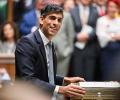
Former UK Prime Minister Rishi Sunak has taken on new academic roles at the University of Oxford and Stanford University, both alma maters of the Conservative Party member of Parliament. Sunak will join Oxford's Blavatnik School of Government as a member of the World Leaders Circle and a Distinguished Fellow, while at Stanford, he will be the William C Edwards Distinguished Visiting Fellow at the Hoover Institution. Sunak expressed his enthusiasm for contributing to both institutions, highlighting their leading research in global challenges, economic policy, and technological advancements. He emphasized the significance of his education at both universities in shaping his life and career. The appointments have been welcomed by both institutions, with leaders praising Sunak's expertise and experience in global affairs and economic policy.

As part of his endeavour to constantly evaluate the performance of his government, Prime Minister Narendra Modi is taking a cue from the Malaysian model, calling it an "excellent example".

President Droupadi Murmu, in her address to the nation on Republic Day, advocated for the "One Nation One Election" initiative, emphasizing its potential to enhance governance and reduce financial burdens. She highlighted the government's efforts to eliminate remnants of colonialism, citing the replacement of British-era criminal laws with modern alternatives. Murmu also lauded India's economic progress, stressing the importance of inclusive growth and social welfare. She urged citizens to remember the sacrifices of freedom fighters and reaffirmed the significance of the Constitution in guiding India's journey towards a prosperous and equitable future.

A bit of economic reforms stalled and decisions delayed -- what Narayana Murthy spoke of -- don't hurt if a country's compassionate and inclusive social fabric has survived intact; if the country is happy, observes Shyam G Menon.

US President-elect Donald Trump has nominated Indian-American scientist Jay Bhattacharya to lead the National Institutes of Health (NIH), the country's top health research and funding institutions. Bhattacharya, a professor of Health Policy at Stanford University, is known for his research on the health and well-being of vulnerable populations. Trump also nominated Jim O'Neill as the deputy secretary of Health and Human Services to work alongside Robert F. Kennedy Jr.

Anura Kumara Dissanayake, the leader of the Marxist Janatha Vimukthi Peramuna's (JVP) broader front National People's Power (NPP), on Sunday consolidated his lead in the Sri Lanka's presidential election.

'With this amendment, permanent employees will cease to exist.' 'The government should give a human touch and human face to labour reforms.' 'Ideas like survival of the fittest, might is right, etc, are rules of the jungle.' 'They cannot give new terms like hire and fire to jungle law.'

This will be the first full-year Budget of the BJP-led National Democratic Alliance government since it came to power for a third consecutive term in July last year.

Expectations from this Budget are sky-high.

'As the global economy undergoes significant transformations in 2025, India's ability to navigate the complexities of trade wars, financial realignments, and emerging blocs will be pivotal,' explain Harsh V Pant and Soumya Bhowmik.
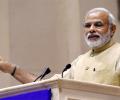
US State Department's report said that this has resulted in many investors retreating slightly from their once forward-leaning support of the BJP-led government
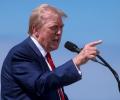
Essential and strategic items such as pharmaceuticals, semiconductors, copper, and energy products like oil, gas, coal and LNG are exempted from the 27 per cent import duty announced by the US on Wednesday, according to think tank GTRI.
Monetary policy easing in India puts it out of step with the United States, the world's largest economy, where interest rates are expected to rise later this year

The external affairs minister also recalled how Pandit Nehru was hesitant in taking assistance from the United States following the 1962 war with China as he was unsure how it would be seen.

'Spend, but create assets, spend but make sure that people benefit from it.' 'This has been a beautiful guiding principle. And I think as a finance minister I owe so much to the prime minister for keeping this path clear before us.'
Facing criticism from the government over the central bank prioritising inflation over growth, the new RBI Governor Sanjay Malhotra on Monday said that prospects of the Indian economy are expected to improve on the back of high consumer and business confidence in 2025. "As we strive to preserve financial stability to support a higher growth path for the Indian economy, our focus remains steadfast on maintaining stability of financial institutions and, more broadly, systemic stability," Malhotra said in foreword to the Financial Stability Report.

Kicking off his second visit to the US in one year with a meeting with eight of the top 10 financial entities in the US, including JP Morgan and Blackstone, Modi outlined efforts made during the last 15 months to increase investment in key areas like infrastructure.

From the 30-share blue-chip pack, ITC Hotels, IndusInd Bank, Mahindra & Mahindra, Sun Pharma, UltraTech Cement and NTPC were among the biggest gainers. Titan, Kotak Mahindra Bank, Nestle, Asian Paints, HCL Tech and ICICI Bank were among the laggards.
Corporate leaders said a stable government at the Centre will help boost infrastructure spend, address agricultural distress, and encouraging employment.

These are initiatives not commonly seen in economic administration.

Manmohan Singh said Narasimha Rao can truly be called father of economic reforms in India.

Economic reforms seem to be on a slow train, while good old fiscal populism is alive and flourishing.

'Let us also not expect that there will be a clean break with the past, much though the new government might like to think about it. In a functional democracy that is neither feasible nor desirable. But basic change it must be,' says Shreekant Sambrani.

On the 134th birth anniversary of the chief architect of the Indian Constitution, Utkarsh Mishra revisits three incidents from Dr B R Ambedkar's life that lay bare the deeply entrenched nature of caste prejudice.

'GST will bring in much needed transparency and higher investments in the coming years and we hope that a few percentage points to India's GDP.'

Prime Minister Narendra Modi on Thursday said his government is using all channels including diplomatic to bring back high-profile economic offenders, leaving them with no option but to return to the country. Speaking at a symposium on credit flow and economic growth, he asked banks to support wealth and job creators with proactive lending while promising to stand by any loans given in right earnest. "In our attempt to bring back fugitive (economic offenders), we relied on policies and law and also used diplomatic channels.

S&P Global Ratings on Wednesday said the impact of the US reciprocal tariff will be limited on India as the economy is domestically oriented with less reliance on exports. YeeFarn Phua, Director, Sovereigns and International Public Finance Ratings, Asia-Pacific S&P Global also said India will clock a 6.7-6.8 per cent GDP growth over the next two years.

There was more to him than he let on, asserts Aditi Phadnis.
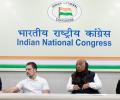
The principal opposition party though appeared content securing 99 of the 543 seats in the 2024 national elections as against its all-time low of 44 in 2014 and then 52 in 2019.

'In the new coalition government, India's reform agenda may prioritise job creation and factor market reforms.'

Soros, a Hungarian-American political activist, and his organisations like OSF have been accused by the ruling BJP of acting against India's interests. His utterances during the Adani-Hindenburg controversy also drew criticism from the party.

We have a government with an extremely weak economic team advising a PM who hardly pays attention to their thoughts, says Jayanta Roy.

The Indian economy can contract by 7.7 per cent in current financial year ending on March 31 and the growth could be 11 per cent in the next financial year, according to the Economic Survey tabled in Parliament by Finance Minister Nirmala Sitharaman. The contraction in FY21 is mainly due to coronavirus (Covid-19) pandemic and the visible damage caused by the subsequent countrywide lockdown to contain it. The survey unveiled two days before the Union Budget is broadly in line with forecasts by the Reserve Bank of India (RBI) which has said it expected the country's GDP to contract by 7.5 per cent in the year ending March 31.
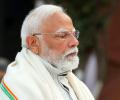
Prime Minister Narendra Modi said on Friday that there have been no attempts from abroad to stoke trouble in India ahead of the Parliament's Budget session, which begins on Saturday. Modi's statement comes as his government prepares to present its first full-fledged budget in its third term. He expressed confidence that the Budget session will infuse new confidence and energy in attaining the goal of 'Viksit Bharat' by 2047, and said his government has been working in a mission mode for an all-round development.
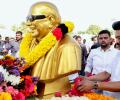
This article traces the history of the DMK's fight for state autonomy, beginning with C.N. Annadurai's advocacy in the 1960s and culminating in M. Karunanidhi's resolution in the Tamil Nadu Assembly in 1974. The article highlights the key figures involved, the arguments presented, and the impact of the Rajamannar Committee Report.

'We face the risk of remaining a low-income country for a very long time unless something changes in the next few years.' 'Instead of constantly talking about becoming a developed economy, we need to start fixing the problems of the economy one by one.' 'There is so much potential, and we are squandering away the opportunity.'
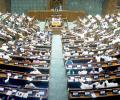
Parliament's approval of the Waqf (Amendment) Bill, a contentious piece of legislation aimed at reforming Waqf bodies, has sparked strong reactions from the opposition, who allege that the bill was "bulldozed" through Parliament. The bill, considered the government's most consequential legislation in its third term, was passed with comfortable majorities in both the Lok Sabha and Rajya Sabha despite opposition claims of a lack of consultation and an intrusion into religious affairs. Other notable bills approved during the session included the Finance Bill, Appropriation Bill, Immigration and Foreigners Bill, and Tribhuvan Sahkari University Bill. The session, which saw high productivity, also witnessed debates on issues such as economic distress, delimitation, and the three-language policy. While the government touted its achievements, the opposition criticized the government's approach and vowed to challenge the Waqf bill in court.

Prime Minister Narendra Modi and French President Emmanuel Macron have called for enhancing trade and investment ties between their countries and committed to further deepening their engagement in the Indo-Pacific. They discussed a full spectrum of bilateral relations, including key global and regional issues, and stressed the urgent need for reform in the United Nations Security Council. The leaders also underscored their commitment to ensuring the global AI sector can drive positive social, economic, and environmental outcomes.
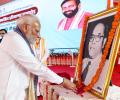
The birth anniversary of Dr Bhimrao Ramji Ambedkar, whose political influence has surged with the passage of time, on Monday was marked by bitter trading of charges between the ruling BJP and opposition parties as they fought for his legacy.
